Dry eyes that won't quit?
Your own serum may be the answer.
Autologous serum eye drops use the healing components already in your blood to soothe, protect, and help repair the surface of your eyes — when artificial tears and prescriptions alone haven't given you lasting comfort.

Comfort you can feel — reading, working, and living without constant dryness.
"Sound familiar?"
If you check two or more boxes, ASED is worth a conversation — even if you've "tried everything."
- Burning, stinging, or gritty feeling that comes back within an hour of using drops
- Watery eyes that still feel dry — a common sign of poor tear quality
- Blurry vision that clears when you blink, especially while reading or on screens
- Contact lenses that become uncomfortable by midday
- Waking up with eyelids that feel stuck or sore
- Using artificial tears 3–4+ times a day without lasting relief
"You're not imagining it — and you're not out of options. Dry eye is often about tear quality, not just tear quantity. That's where serum drops are different."
What are autologous serum eye drops?
Autologous means "from your own body." Serum is the clear, nutrient-rich part of your blood after the red cells are removed.
At San Antonio Eyeworks, we coordinate a simple blood draw, then a sterile compounding lab separates the serum, dilutes it with preservative-free saline, and packages it into small dropper bottles just for you. The drops look clear — not red — and feel like natural tears because, in many ways, they are.
Unlike most over-the-counter artificial tears, which mainly lubricate for a few minutes, serum contains components your eye surface uses every day to stay healthy:
- Growth factors & fibronectin — support the cornea's natural repair process and help maintain a smooth, stable surface.
- Vitamin A & nutrients — help nourish the conjunctiva and goblet cells that keep mucin — the "glue" of your tear film — healthy.
- Anti-inflammatory proteins — serum is naturally balanced and biocompatible, so it's typically very well tolerated.
- Closer to real tears — similar pH and components to your own tears, so it protects while it soothes — not just wets.
Who is ASED for?
ASED is most often recommended for moderate to severe dry eye and ocular surface disease that hasn't responded well to first-line care. You may be a candidate if you have:
- Severe or persistent dry eye disease, including Sjögren's-related dry eye
- Meibomian gland dysfunction (MGD) where the tear film evaporates too quickly
- Recurrent corneal erosions or slow-healing surface irritation
- Dry eye after LASIK, cataract, or other eye surgery
- Neurotrophic keratitis or reduced corneal sensation
- Contact lens intolerance due to dryness
- Dry eye that limits reading, driving at night, or screen work
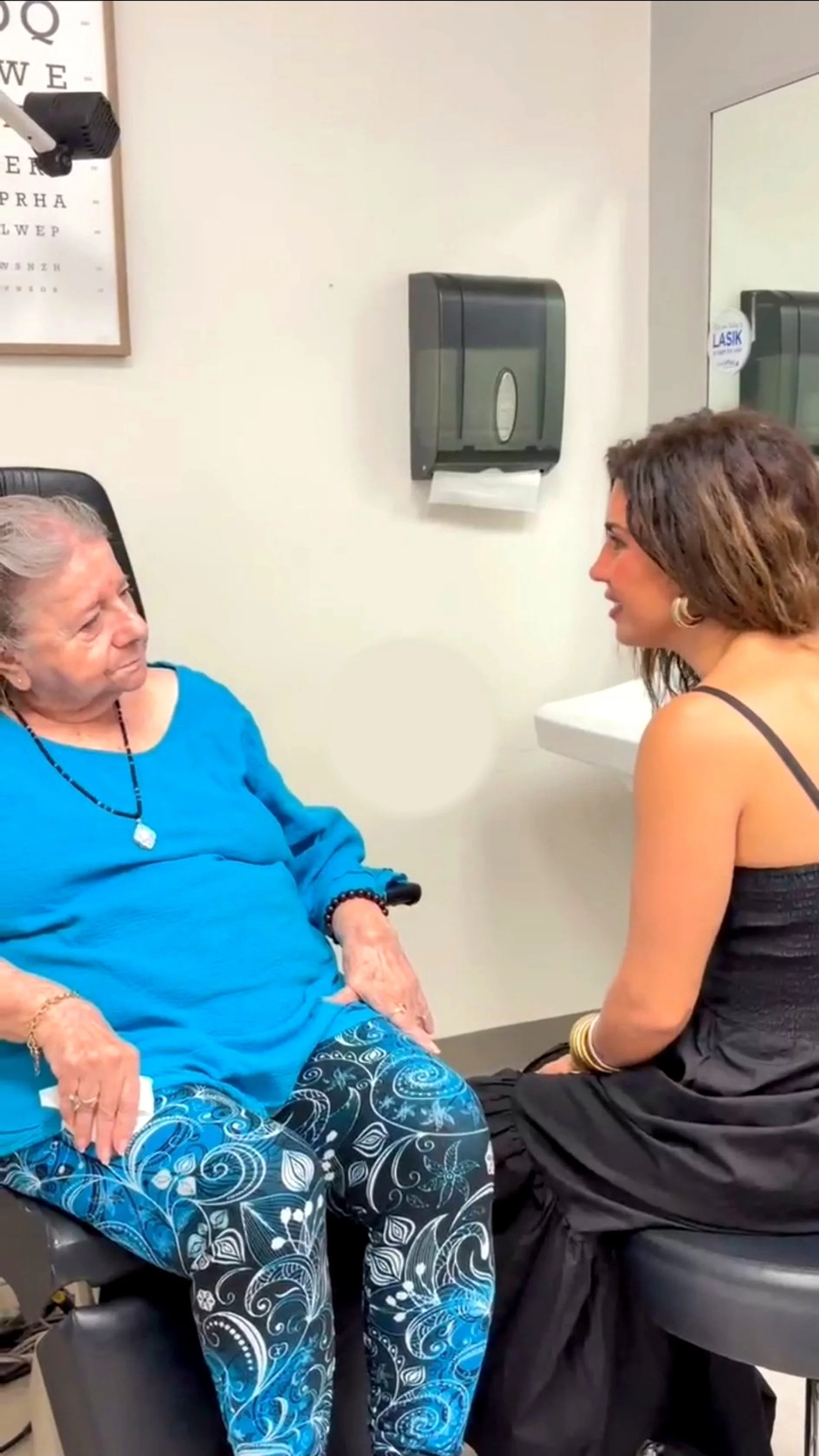
Every plan starts with listening — our doctors tailor dry eye care to your eyes and your life.
ASED may not be the right first step if your dry eye is mild and well-controlled with artificial tears, or if certain blood-borne conditions or active eye infections need to be addressed first. One of our doctors will review your history, examine your tear film and meibomian glands, and talk through alternatives before recommending it.
How it works: from blood draw to drops
Patients are often surprised by how simple the process is. No fasting, no hospital visit, and we handle the coordination.
- Consultation — We examine your eyes, review what you've tried, and confirm ASED is a good fit. We also discuss cost and what insurance typically does/doesn't cover.
- Blood draw — A small amount of blood is drawn from your arm — similar to routine lab work. Most patients are in and out quickly.
- Serum preparation — The blood is allowed to clot, then spun in a centrifuge to separate the serum. It's diluted with sterile, preservative-free saline (commonly to 20–50% serum) and dispensed into dropper bottles under sterile conditions.
- Pick up & store — You receive a frozen supply (often several months' worth, depending on your dose). Bottles stay in your freezer until you're ready to use one.
- Use at home — Thaw/use one bottle at a time, keep it refrigerated, and apply as directed — often 4–8 times daily at first, then tapered as you improve.
Using your drops at home
Because ASED is preservative-free and made for you alone, storage and hygiene matter. We'll give you a printed instruction sheet — the essentials:
- Keep the supply frozen (typically up to 3–6 months, per your lab's dating) and thaw only one bottle at a time.
- Refrigerate the bottle you're using and discard it after the timeframe we give you (often 7–10 days once opened/thawed, or as labeled).
- Wash hands before each use, avoid touching the tip to your eye or lashes, and recap promptly.
- Don't share — these drops are autologous, made only for you.
- Tell us if a bottle looks cloudy, changes color, or if you develop pain, light sensitivity, or discharge.
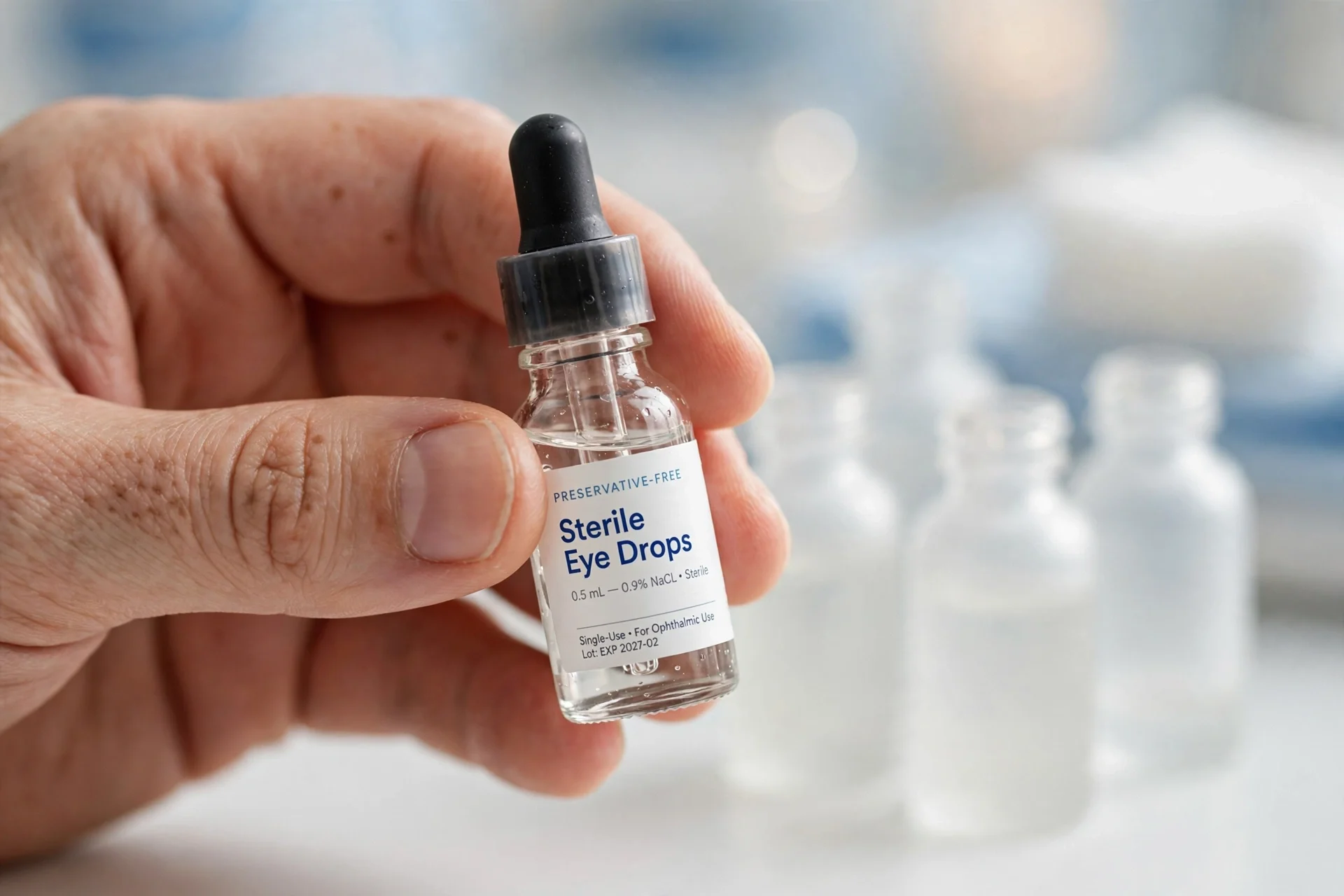
Made just for you — sterile, preservative-free, and stored frozen until you need it.
What to expect
- Days 1–3: Drops feel soothing and familiar — like natural tears. Some patients notice less burning by the end of the first week.
- Weeks 1–2: Many patients report a noticeable drop in gritty/burning episodes and less reliance on artificial tears.
- Weeks 4–6: Surface healing and tear stability often continue to improve. We'll check your cornea and tear film and adjust frequency.
- Ongoing: ASED is often used alongside other care — warm compresses, lid hygiene, IPL or Tixel for gland function, and prescription drops if needed. It's a program, not a one-time fix.
Every eye is different. Some people need a few months of consistent use, and we may repeat the blood draw when your supply runs low if you're benefiting.
How ASED fits with IPL & Tixel at San Antonio Eyeworks
Dry eye rarely has one cause. If your glands aren't releasing healthy oil, your tears evaporate — no drop alone can fix that. That's why we often combine therapies:
- IPL (intense pulsed light) opens and improves meibomian gland function for patients who are candidates, helping your own oil layer protect your tears.
- Tixel® supports eyelid skin and gland health around the eyes as part of a physician-directed plan.
- ASED nourishes and protects the surface while glands recover, so you feel better during treatment — not just after.
During your consultation, one of our doctors will map out what makes sense first, what can wait, and what you can do at home. No pressure to do everything at once.
Frequently asked questions
Is it made from my own blood — is that safe?
Yes. "Autologous" means the serum comes from you, so there's no donor tissue and no risk of rejecting someone else's product. The blood is processed under sterile conditions by a compounding lab/pharmacy, and bottles are labeled only for you. As with any biologic product, we screen your history and handle the serum promptly and frozen to reduce contamination risk.
Does the blood draw hurt? Do I need to fast?
It's like routine lab work — a brief pinch from a small needle in your arm. No fasting is typically required. Tell us if you're needle-anxious; we'll make you comfortable.
What does it cost? Does insurance cover it?
Because ASED is compounded for an individual and not FDA-approved as a manufactured drug, most insurance plans don't cover it. Cost varies by concentration, supply length, and lab fees. We'll give you a clear, written estimate at your consultation with no surprises — many patients find a few months' supply comparable to what they were already spending on multiple over-the-counter and prescription products.
How often do I use the drops, and for how long?
Common starting schedules are 4–8 times daily, then tapered as symptoms and surface health improve. Some patients use them for a few months; others with chronic conditions use them longer with periodic re-evaluations.
Can I use ASED with my other drops or contacts?
Often yes, with spacing. We'll tell you how long to wait between products (usually at least 5–10 minutes) and whether to remove contacts before instilling. Bring a list of everything you use — including over-the-counter drops — to your visit.
What if I'm not a candidate for a blood draw?
Talk with us anyway. Depending on your situation, alternatives — including other prescription, in-office, or allogeneic (donor) options where appropriate — may be discussed, or we may focus first on gland treatment and other surface care.
Ready to see if ASED is right for you?
Book a dry eye consultation with one of our doctors. We'll examine your tear film, talk through what you've tried, and build a plan that fits your eyes — and your life.
San Antonio Eyeworks • 4553 N Loop 1604 W, Ste 1225, San Antonio, TX 78249
This page is for education only and is not medical advice. Autologous serum eye drops are compounded for individual patients and are not FDA-approved as a manufactured drug. Candidacy, concentration, dosing, storage, and cost are determined by one of our doctors after an in-person examination. If you experience eye pain, vision changes, light sensitivity, or discharge, contact the office promptly or seek urgent care.
